


Introduction
In the fast-paced world of footwear production, staying ahead of the competition requires innovation at every step. One of the most important areas of footwear manufacturing is the production of shoe soles, which directly affects both the functionality and aesthetic appeal of shoes. Traditionally, vulcanizing machines have been the go-to for shoe sole production, but as technology advances, manufacturers are beginning to embrace more efficient, versatile methods. Sole injection molding machines are quickly becoming the superior choice, offering numerous advantages over their vulcanizing counterparts. This article will delve into why sole injection molding machines are revolutionizing the shoe sole production industry and why they might be the right investment for your business.
Understanding Shoe Sole Vulcanizing Machines
A shoe sole vulcanizing machine is a type of industrial equipment used in the process of vulcanization, where rubber or rubber-based materials are heated and chemically cross-linked to enhance their durability, elasticity, and resistance. In vulcanizing machines, raw rubber is placed in a mold, and heat and pressure are applied for a specified amount of time, causing the rubber to cure and harden into its final shape. This method has been a staple in the footwear industry for many years.
How Vulcanizing Works: The Chemical Process and Its Significance
Vulcanization is a chemical reaction that involves sulfur and heat to create cross-links between rubber molecules. These cross-links are responsible for giving the rubber its elasticity and strength. However, the vulcanizing process is time-consuming and requires careful control of both temperature and pressure to ensure the desired outcome.
While vulcanizing machines have been effective, they come with certain limitations. The curing process is relatively slow, requiring significant time to produce each sole. This can lead to reduced production rates and longer turnaround times, which can hinder overall efficiency. Additionally, while vulcanizing allows for a high degree of strength and durability, it limits the ability to incorporate different materials or additives into the sole, thus restricting design flexibility.
The Rise of Sole Injection Molding Machines
In recent years, sole injection molding machines have emerged as a game-changer in the shoe manufacturing industry. Unlike vulcanizing, injection molding involves injecting molten material into a mold under high pressure, where it quickly solidifies into the desired shape. This method is widely used across various industries for manufacturing plastic and rubber products, and it’s proving to be incredibly effective in producing high-quality, durable shoe soles.
How Injection Molding Technology Works in the Context of Shoe Sole Production
Injection molding begins by melting the rubber or thermoplastic material. The material is then injected into a mold cavity under high pressure. Once the material fills the mold, it cools and solidifies into the final shape. The process is fast and highly repeatable, making it an ideal solution for large-scale production.
Unlike vulcanizing, which requires a chemical curing process, injection molding produces soles with consistent properties and design precision, with minimal waste. The technology can also easily accommodate complex shapes and designs, offering greater flexibility in terms of customization. Moreover, injection molding machines are equipped with automation systems that allow for high throughput with minimal manual intervention.
Key Differences: Vulcanizing vs. Injection Molding
At the heart of the debate between vulcanizing and injection molding is a comparison of the two processes’ efficiency, cost-effectiveness, and quality.
Comparing the Chemical Processes: Vulcanization vs. Injection Molding
-
Vulcanization requires a lengthy curing process involving heat and sulfur, which limits the production speed and can lead to increased energy consumption.
-
Injection molding, on the other hand, is a rapid process that allows for faster production times, as the material quickly solidifies when injected into the mold.
Time Efficiency and Cost-Effectiveness
-
Vulcanizing can take several minutes per sole due to the time required for the chemical reaction and curing process. In contrast, injection molding is much faster—sole production times can be as short as 1–2 minutes, significantly increasing output and reducing production costs.
-
The ability to rapidly produce soles also reduces labor costs, as fewer operators are needed, and the process is largely automated.
Product Quality, Consistency, and Customization
-
While vulcanized rubber soles are known for their durability, the injection molding process offers superior consistency. The molding machine injects the same amount of material into every cavity, ensuring uniform thickness and density. This precision is critical for high-quality products and consistent performance, especially when producing soles with multiple layers or materials.
-
Injection molding also offers more flexibility in design. Manufacturers can integrate multiple materials in a single molding process, producing soles that combine the benefits of various compounds, such as rubber and thermoplastics, for enhanced performance and style.
Key Differences: Vulcanizing vs. Injection Molding
At the heart of the debate between vulcanizing and injection molding is a comparison of the two processes’ efficiency, cost-effectiveness, and quality.
| Feature | Shoe Sole Vulcanizing Machine | Sole Injection Molding Machine |
|---|---|---|
| Production Speed | Slower, requires several minutes per sole due to curing time. | Faster, can produce a sole in 1-2 minutes. |
| Process | Chemical curing (heat + sulfur). | Physical process (injection of molten material). |
| Material Flexibility | Limited to rubber or rubber blends. | Can handle multiple materials (rubber, thermoplastics, etc.). |
| Customization & Design | Less flexibility in design, mainly suited for standard shapes. | High flexibility, can produce complex shapes and multi-material soles. |
| Cost Efficiency | Higher operational costs due to longer cycle times and labor. | Lower operational costs, especially for high-volume production. |
| Environmental Impact | Higher energy consumption and waste due to chemical process. | More energy-efficient with less waste, some materials are recyclable. |
| Maintenance Requirements | Requires regular maintenance due to high temperatures and pressure. | Requires less maintenance with modern automation and precision. |
| Durability of Product | Very durable but can be inconsistent in quality. | High consistency in product quality, better control over material properties. |
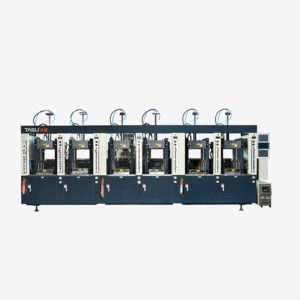
Technological Advancements in Sole Injection Molding
As demand for high-quality and cost-effective production increases, technological advancements in injection molding are making it an even more compelling choice for shoe manufacturers. Modern injection molding machines come with features such as:
Improved Automation and Precision
State-of-the-art injection molding machines feature advanced robotics and precision controls that allow for extremely fine adjustments to pressure, temperature, and cycle time. These machines can handle larger volumes with greater precision and fewer defects, improving the overall quality of each product.
Enhanced Productivity and Reduced Waste
The efficiency of injection molding allows manufacturers to produce a higher volume of soles in a shorter amount of time, with minimal waste. The materials are used more effectively, which not only saves costs but also benefits the environment by reducing scrap.
Incorporating Multiple Materials
With injection molding, manufacturers can now create multi-material soles that combine the benefits of different substances, like rubber, EVA (ethylene-vinyl acetate), and thermoplastic polyurethane (TPU). These materials can be injected into the mold simultaneously, enabling a versatile approach to production.
Sole Injection Molding Machine vs. Vulcanizing Machine: Which One is Better for Your Business?
When deciding between a vulcanizing machine and a sole injection molding machine, there are several factors to consider.
Industry Needs and Scalability
-
If your business focuses on large-scale production and needs rapid throughput, injection molding is a clear winner due to its speed and automation.
-
For manufacturers focused on small batches or specialized products, vulcanizing might still have a place in certain scenarios, though injection molding can often meet these needs with greater efficiency.
Long-Term Cost Savings and ROI
-
The high upfront cost of an injection molding machine may seem daunting, but its efficiency and ability to reduce labor and material waste make it a highly cost-effective choice in the long run.
-
Vulcanizing machines, while less expensive upfront, may lead to higher ongoing operating costs due to their longer production cycles and increased labor requirements.
Environmental Benefits
-
Injection molding is more environmentally friendly, producing less waste and requiring less energy during the manufacturing process. The ability to recycle scrap material in injection molding also helps reduce the carbon footprint compared to vulcanizing.
Conclusion
In conclusion, the sole injection molding machine is clearly the superior choice for modern footwear manufacturers looking to improve production speed, reduce costs, and produce high-quality, customizable soles. While vulcanizing has been a mainstay in the industry for decades, the technological advancements in injection molding are revolutionizing shoe sole production. As the industry continues to evolve, injection molding will likely become the go-to method for manufacturers seeking to remain competitive and meet the growing demand for high-performance footwear.