

Introduction
Rubber is an incredibly versatile material used across various industries, from automotive to medical devices. However, raw rubber, in its unprocessed state, is too soft, sticky, and prone to wear and tear. That’s where the vulcanization process comes in. Vulcanization transforms raw rubber into a tough, elastic, and durable material through the application of heat, pressure, and chemical additives like sulfur. This process not only enhances the physical properties of rubber but also extends its lifespan and functionality.
In modern manufacturing, rubber injection molding machines have become essential for efficiently producing high-quality vulcanized rubber products. These machines are specifically designed to inject rubber into molds under controlled conditions, allowing for precise rubber vulcanization. The integration of vulcanization with injection molding ensures consistency, improves product quality, and increases production speed.
What is Rubber Vulcanization?
Rubber vulcanization is a chemical process that converts raw rubber into a more durable, elastic, and heat-resistant material. This process involves heating the rubber with sulfur and other additives to form cross-links between individual rubber molecules, which enhances the rubber’s strength and elasticity.
In its unvulcanized state, rubber is relatively soft and malleable, making it suitable for molding but not very durable or resilient under stress. When subjected to heat, sulfur bonds with the polymer chains in the rubber, creating a network of interconnected molecules. This network structure makes the rubber more resistant to wear, temperature changes, and physical stress.
The Role of Sulfur in Vulcanization:
Sulfur is crucial in the vulcanization process, forming chemical bridges between polymer chains. The amount of sulfur used, along with the temperature and time applied during vulcanization, determines the rubber’s final properties, including hardness, flexibility, and resilience. Typically, more sulfur results in harder and less flexible rubber. However, there is a balance to maintain; too much sulfur can make the rubber brittle, while too little can leave it too soft and prone to wear.
How Heat and Pressure Transform Rubber:
The vulcanization process typically requires high temperatures—usually between 140°C to 180°C (284°F to 356°F)—and moderate pressure. The combination of heat and pressure activates the sulfur, causing it to bond with the rubber molecules and transforming it into a cross-linked structure. Heat accelerates the chemical reactions, while pressure ensures that the rubber is tightly molded into the desired shape during curing.
The Chemical Process:
At a molecular level, vulcanization occurs when sulfur atoms form bridges between the carbon atoms of the rubber’s polymer chains. These bridges create a more rigid network that enhances the rubber’s properties, such as tensile strength, resilience, and resistance to aging. The process is highly dependent on temperature and time—insufficient heat or curing time results in incomplete vulcanization, leading to soft, weak rubber, while excessive heat or time can degrade the material and cause brittleness.
The Types of Vulcanization:
There are two main types of vulcanization:
-
Hot Vulcanization: This is the most common form, where heat is applied to the rubber in the presence of sulfur and accelerators to promote the cross-linking reaction. The vulcanization is typically done in molds or in an injection molding machine.
-
Cold Vulcanization: This method uses chemical accelerators instead of heat to initiate the cross-linking process. Cold vulcanization is generally used for products that require a faster curing time or for specific applications where heat cannot be applied.
The Role of the Rubber Injection Molding Machine in Vulcanization
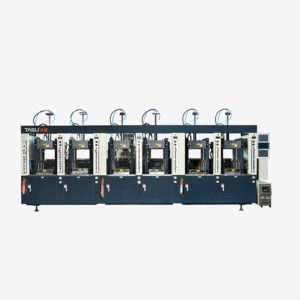
The rubber injection molding machine plays a pivotal role in the rubber vulcanization process. This advanced machinery is designed to inject molten rubber into a mold cavity under controlled conditions, where the vulcanization process occurs. By combining precise control of temperature, pressure, and timing, injection molding machines ensure that the vulcanization process is both efficient and consistent, producing high-quality rubber products.
How Rubber Injection Molding Machines Facilitate Vulcanization:
-
Precise Temperature Control: Temperature is one of the most critical factors in the vulcanization process. Rubber injection molding machines are equipped with advanced temperature control systems that ensure the rubber reaches the optimal curing temperature, typically between 140°C to 180°C (284°F to 356°F). These machines include heating plates and mold temperature controllers, allowing for rapid adjustments and precise regulation throughout the curing cycle.
-
Accurate Pressure Application: During the injection molding process, rubber is injected into the mold cavity under high pressure, ensuring even distribution and compaction. The clamping pressure and injection pressure are controlled independently, which helps to avoid defects in the final product, such as air pockets or incomplete vulcanization.
-
Timing and Curing Cycle Control: The rubber injection molding machine provides precise control over the vulcanization time, ensuring that the rubber remains under heat and pressure for the exact amount of time required to achieve optimal vulcanization. This ability to fine-tune each phase of the process is especially important when working with different rubber compounds.
-
Automation for Consistency and Quality: Automation in rubber injection molding machines ensures that the entire process, from material injection to curing, is executed with minimal human intervention. This reduces the chances of errors and results in a more consistent output, maintaining high-quality standards across production runs.
Advantages of Using Rubber Injection Molding Machines for Vulcanization:
-
High Precision: The ability to control various parameters such as pressure, temperature, and injection speed means that rubber injection molding machines can produce parts with high precision and consistency.
-
Increased Production Efficiency: These machines offer faster cycle times compared to traditional molding methods, thanks to their ability to maintain constant temperature and pressure.
-
Reduced Material Waste: Precise control over the injection process helps minimize material waste, as molds are filled with the exact amount of rubber required.
-
Improved Product Quality: Consistent vulcanization across all parts reduces the likelihood of defects, resulting in a higher quality finished product, which is especially important for high-performance applications.
Key Factors That Affect the Rubber Vulcanization Process
The rubber vulcanization process is a delicate balancing act, with several key factors influencing the final product’s properties. The precision with which each factor is controlled during the process directly impacts the quality, performance, and durability of the molded rubber components.
-
Temperature: The Key to Effective Vulcanization
Temperature control is perhaps the most critical factor in rubber vulcanization. Optimal vulcanization temperatures typically range from 140°C to 180°C (284°F to 356°F). The rubber injection molding machine uses heating plates and mold temperature controllers to evenly distribute heat throughout the rubber, ensuring uniform vulcanization.
-
Pressure: Ensuring Uniform Flow and Curing
Proper pressure ensures that the rubber flows evenly into the mold cavity and is compacted correctly for even vulcanization. The ability to independently control both injection pressure and clamping pressure ensures that the rubber is distributed uniformly and that the mold is securely held during vulcanization.
-
Timing: Balancing Cure Time for Optimal Properties
The timing of the vulcanization process, particularly the cure time, is crucial for achieving the right balance of strength, flexibility, and elasticity. Rubber injection molding machines provide precise control over the curing time, which allows manufacturers to adjust the process for specific rubber formulations.
-
The Rubber Compound and Additives: Influencing Vulcanization Quality
Different rubber formulations require different vulcanization conditions. The type of rubber compound, sulfur content, and the use of accelerators and curing agents all play a significant role in the vulcanization process.
Types of Rubber Vulcanization in Injection Molding Machines
In rubber injection molding, various vulcanization techniques are suitable for different rubber compounds and product requirements. The choice of vulcanization method depends on the desired properties of the final product, the complexity of the mold, and the speed of production.
-
Traditional Vulcanization vs. Modern Approaches
-
Traditional Vulcanization (Hot Vulcanization): The most commonly used method, where rubber is mixed with sulfur and heated in the mold under pressure.
-
Modern Vulcanization Techniques: New methods such as microwave vulcanization, electron beam vulcanization, and cold vulcanization have emerged to meet the growing demand for faster production times and better energy efficiency.
-
Solid vs. Liquid Silicone Rubber Vulcanization
-
Solid Silicone Rubber (SSBR) Vulcanization: Follows the traditional process, creating strong, durable materials suitable for various applications.
-
Liquid Silicone Rubber (LSR) Vulcanization: Involves a two-component system that allows for precision molding applications, offering fast and efficient vulcanization at lower temperatures.
-
The Impact of Rubber Type on Vulcanization
Different rubber types, including natural rubber, synthetic rubber, and silicone rubber, require different vulcanization techniques and conditions. Each type has specific properties and vulcanization needs that must be considered during the production process.
-
Vulcanization of Other Specialty Rubbers
Specialty rubbers, such as fluoroelastomers and thermoplastic elastomers, have unique vulcanization requirements that differ from traditional rubber types. These specialty materials often require specific additives and conditions to achieve optimal performance.
Conclusion
The future of rubber vulcanization is bright, with numerous innovations on the horizon that promise to enhance the efficiency, sustainability, and precision of the process. From the development of sustainable rubber materials to the integration of smart manufacturing technologies, the rubber industry is poised for significant transformation. By embracing these new technologies and practices, manufacturers can meet the growing demand for high-quality rubber products while minimizing their environmental impact and improving operational efficiency.
As the rubber vulcanization process continues to evolve, companies that stay ahead of these trends will be better positioned to remain competitive in an increasingly complex and demanding marketplace. The future of rubber vulcanization holds exciting possibilities, from faster curing times to advanced materials that offer improved properties and performance.