


Injection molding stands as a cornerstone manufacturing process for crafting countless plastic and rubber parts, and the tonnage of injection molding machine emerges as a pivotal factor that directly shapes both operational efficiency and product quality. Tonnage, in essence, represents the clamping force a machine exerts to keep the mold tightly closed during the injection phase. Selecting the appropriate tonnage is not just a technical detail—it is a make-or-break decision for ensuring smooth production, as incorrect tonnage can lead to a cascade of issues, from defective parts to machine damage.
Whether you are new to the injection molding industry or a seasoned professional, mastering the fundamentals of the tonnage of injection molding machine is key to optimizing your operations. It ensures that your machine runs at peak efficiency, minimizes waste, and consistently delivers high-quality products. In this article, we will explore every critical aspect of injection molding machine tonnage, including how to calculate tonnage for injection molding machine, the factors that influence it, considerations specific to rubber molding, and the consequences of poor tonnage selection.
What is the Tonnage of Injection Molding Machine?
The tonnage of injection molding machine is a core specification that dictates a machine’s ability to handle specific molding tasks. At its core, it refers to the clamping force the machine applies to secure the mold shut while molten material is injected under high pressure. Measured in tons, this force is non-negotiable for maintaining mold integrity during the process.
Without sufficient clamping force (i.e., too low tonnage), the mold may open slightly when molten material is injected. This can result in defects like flash—excess material seeping out of mold gaps—or incomplete parts that fail to meet design specifications. Conversely, excessive tonnage is not just unnecessary; it leads to wasted energy, puts undue stress on the machine’s components, and accelerates wear and tear over time.
The tonnage of injection molding machine directly aligns with the size and complexity of the parts being produced. Higher tonnage machines are equipped to handle larger molds and more intricate parts, as they can generate the force needed to keep even large molds closed under high injection pressure. Lower tonnage machines, by contrast, are better suited for smaller, simpler parts, offering a more cost-effective and energy-efficient solution for such applications.
Factors like the type of material being molded, the design of the mold, and the size of the part all play a role in determining the required tonnage. This means that a precise understanding of your project’s needs is essential to avoid overinvesting in a machine with more tonnage than necessary or struggling with a machine that lacks the force to get the job done.
How to Calculate Tonnage for Injection Molding Machine
Calculating the right tonnage of injection molding machine involves a mix of theoretical formulas and real-world considerations. The basic formula used to estimate required tonnage provides a starting point, but it must be adjusted to account for the unique aspects of your project.
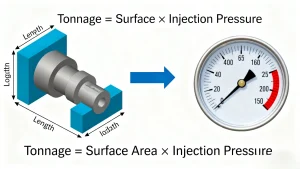
The general formula to calculate tonnage for injection molding machine is:
Tonnage = Surface Area × Injection Pressure
Let’s break down each component to ensure accuracy:
Surface Area
The surface area refers to the area of the molded part that comes into contact with the machine’s clamping plates. For simple, flat parts, this can be calculated using basic geometry (e.g., length × width). However, for complex parts with irregular shapes, cavities, or undercuts, a more detailed approach is needed—often involving 3D modeling or specialized software to measure the total contact area accurately. Even small miscalculations here can lead to significant errors in tonnage estimation.
Injection Pressure
Injection pressure is the force exerted by the machine on the molten material to push it into the mold cavity. This pressure varies based on several factors: the type of material (e.g., rigid plastics vs. flexible elastomers), the part’s wall thickness (thinner walls require higher pressure to fill), and the molding conditions (e.g., temperature). Standard injection pressure ranges from 20 to 150 MPa (megapascals), but it is critical to reference the material manufacturer’s guidelines for optimal values.
Example Calculation
Suppose you are molding a simple plastic part with a surface area of 100 cm², and the recommended injection pressure for the material is 60 MPa. Using the formula:
Tonnage = 100 cm² × 60 MPa = 6000 kgf (kilogram force)
To convert kilogram force to tons (the standard unit for injection molding machine tonnage), divide by 1000:
Tonnage = 6000 kgf ÷ 1000 = 6 tons
This means you would need an injection molding machine with a clamping force of at least 6 tons to mold the part effectively.
It is important to note that this formula provides a basic estimate. Additional factors—such as part complexity (e.g., thin walls that increase pressure requirements), mold material (e.g., steel vs. aluminum), and injection speed (high-speed injection may demand extra tonnage)—should be factored in to adjust the final tonnage requirement.
Factors Affecting the Tonnage of Injection Molding Machine
Several variables influence the required tonnage of injection molding machine, and understanding these is critical to avoiding costly mistakes. Below are the most significant factors:
Material Type
Different materials have distinct properties that impact tonnage needs. For example, rubber and elastomers require higher tonnage than standard thermoplastics (e.g., polyethylene or polypropylene). This is because rubber has higher viscosity (making it harder to inject) and greater elasticity (which causes it to “spring back” after injection, requiring more force to keep the mold closed). Similarly, high-density materials or those with high melt flow rates may demand additional clamping force to prevent mold leakage.
Part Design
The complexity of the part’s design directly affects tonnage. Thin-walled parts, for instance, require higher pressure to fill the mold completely, which in turn increases the needed tonnage to keep the mold closed. Parts with deep cavities or multiple cavities also demand more force, as the injection pressure is distributed across a larger area. Even small features like ribs or bosses can add to the surface area, requiring a tonnage adjustment.
Machine Size and Stroke Length
Larger injection molding machines are designed to accommodate bigger molds, which naturally require more tonnage to close securely. Stroke length—the distance the mold travels to open and close—also plays a role: longer stroke lengths mean the machine must generate more force to pull the mold closed and maintain pressure throughout the cycle. Smaller machines with shorter stroke lengths, by contrast, require less tonnage for smaller molds.
Cycle Time
Shorter cycle times (i.e., faster production rates) often require higher tonnage. When cycles are accelerated, the injection phase is quicker, putting more pressure on the mold in a shorter period. To prevent mold opening during rapid injection, the machine needs additional clamping force to maintain stability. Machines optimized for high-speed production are typically engineered with higher tonnage capabilities to handle these demands.
Rubber Injection Molding Machine: Tonnage Considerations
A rubber injection molding machine requires unique tonnage considerations compared to machines used for plastic molding. Rubber’s inherent properties—high viscosity, elasticity, and the need for curing—make it a more challenging material to mold, and this translates to higher tonnage requirements.
Elastic Recovery of Rubber
One of the primary reasons rubber injection molding machine needs more tonnage is rubber’s elastic recovery. After the molten rubber is injected into the mold, it tends to expand (or “spring back”) once pressure is released during the curing process. To counteract this expansion and keep the mold tightly closed—ensuring the part retains its shape and dimensions—the machine must apply additional clamping force. Without this extra tonnage, the mold may open slightly, leading to flash or misshapen parts.
Mold Size and Cavity Depth
Rubber injection molding machine often handles larger molds or molds with deeper cavities (common in rubber parts like gaskets, seals, or hoses). Larger molds have a greater surface area, which increases the required clamping force to maintain pressure. Deeper cavities also demand more tonnage, as the injection pressure needed to fill the cavity completely is higher, and the machine must counteract this pressure to keep the mold closed.
Material-Specific Requirements
Different types of rubber (e.g., natural rubber, nitrile rubber, silicone) have varying viscosity and curing needs. For example, silicone rubber requires higher temperatures for curing, which can affect material flow and pressure requirements—ultimately influencing tonnage. It is essential to consult the rubber manufacturer’s specifications to determine the exact tonnage needed for your specific material.
How to Choose the Right Tonnage of Injection Molding Machine
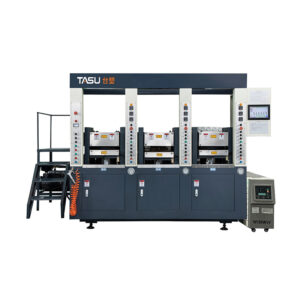
Selecting the correct tonnage of injection molding machine goes beyond just applying the calculation formula. It requires a holistic approach that balances part requirements, material properties, and production goals. Here’s how to approach it:
Tonnage=Surface Area×Injection Pressure
Evaluate Part Size and Design
Start by analyzing the part’s size, wall thickness, and complexity. Larger parts or those with thin walls, deep cavities, or multiple features will require more tonnage. Create a detailed 3D model of the part to accurately measure surface area, and consider how design elements (e.g., undercuts, ribs) might impact pressure and tonnage needs.
Understand Material Properties
Research the material’s specifications—whether it’s plastic, rubber, or an elastomer. Refer to the manufacturer’s guidelines for recommended injection pressure and tonnage. For a rubber injection molding machine, pay special attention to the material’s elasticity and viscosity, as these will drive higher tonnage requirements.
Consider Cycle Time and Production Efficiency
If you need high production volumes with short cycle times, opt for a machine with slightly higher tonnage than the basic calculation suggests. Faster cycles increase injection pressure and speed, so extra tonnage ensures the mold stays closed and parts remain consistent. For lower-volume production or slower cycles, a machine closer to the calculated tonnage may be sufficient.
Avoid Over-Tonnage or Under-Tonnage
It may be tempting to choose a machine with more tonnage than needed to “play it safe,” but this is inefficient. Over-tonnage machines consume more energy, have higher operational costs, and put unnecessary stress on components. Under-tonnage machines, meanwhile, struggle to close molds properly, leading to defects, longer cycle times, and machine wear. Aim for a tonnage that aligns with your calculated needs, plus a small buffer (typically 10-20%) to account for unexpected variables.
The Consequences of Choosing the Wrong Tonnage
Selecting an incorrect tonnage of injection molding machine can have far-reaching consequences, affecting product quality, machine lifespan, and operational costs:
Product Defects
- Insufficient Tonnage: Too little clamping force leads to mold leakage, resulting in flash (excess material on parts), incomplete filling of the mold (leading to hollow or misshapen parts), and poor surface finish. These defects require rework or scrapping, increasing waste.
- Excessive Tonnage: Too much force can cause part distortion or warping, as the mold applies excessive pressure to the part during cooling. It can also damage the mold itself—e.g., bending or cracking mold plates—leading to permanent defects in all subsequent parts.
Machine Wear and Damage
- Over-Tonnage: Machines with more tonnage than needed experience unnecessary stress on hydraulic systems, clamping plates, and tie bars. This accelerates wear and tear, leading to more frequent breakdowns, costly repairs, and a shorter machine lifespan.
- Under-Tonnage: Machines struggling to meet tonnage requirements often overwork their hydraulic pumps and motors to compensate. This can cause overheating, fluid leaks, and premature failure of critical components.
Increased Production Costs
- Over-Tonnage: Higher tonnage machines consume more energy (even when not needed), increasing utility bills. They also tend to be more expensive to purchase and maintain, raising upfront and long-term costs.
- Under-Tonnage: Defective parts require rework or scrapping, which wastes material and labor. Longer cycle times (as the machine struggles to fill molds properly) reduce production output, lowering overall efficiency and profitability.
Summary
Injection molding machine tonnage is a critical factor that directly impacts production efficiency, product quality, and equipment longevity. The tonnage of injection molding machine refers to the clamping force needed to keep molds closed during injection, and knowing how to calculate tonnage for injection molding machine—using the formula of surface area multiplied by injection pressure, adjusted for real-world factors—is essential for accurate selection.
Key considerations include material type (with rubber injection molding machine requiring higher tonnage due to rubber’s elasticity), part design, machine size, and cycle time. Choosing the wrong tonnage—whether too high or too low—leads to defects, machine damage, and increased costs. By carefully evaluating all factors and using precise calculations, manufacturers can select the optimal tonnage to ensure smooth operations, high-quality parts, and long-term profitability.