


When manufacturing footwear, the selection of sole material directly impacts comfort, durability, and overall product performance. Among the most widely used thermoplastic materials for soles are Thermoplastic Rubber (TPR) and Thermoplastic Polyurethane (TPU). While both serve the core purpose of sole production, their properties, costs, and ideal applications differ significantly. This guide explores the nuances of TPU vs TPR, their manufacturing processes, and how to choose between them for specific footwear needs.
1. What is TPR (Thermoplastic Rubber)?
TPR is a versatile hybrid material that merges the elasticity of rubber with the processability of plastic. Composed of a blend of synthetic rubber and thermoplastics, it has become a staple in budget-friendly footwear production due to its balanced properties and low manufacturing costs.
Key Properties of TPR
- Flexibility: Can bend and stretch repeatedly without permanent deformation, ensuring comfort in daily wear.
- Durability: Offers sufficient resilience for everyday use, though it is less robust than TPU under heavy stress.
- Shock Absorption: Provides decent cushioning, supporting foot comfort during casual activities.
- Recyclability: Can be reprocessed from excess material, reducing waste and lowering production costs.
- Water Resistance: Performs well in wet environments, making it suitable for casual outdoor footwear.
Common Applications of TPR
TPR is primarily used in mass-produced, affordable footwear, including:
- Casual shoes and sneakers
- Slippers and house shoes
- Heels and outsoles for everyday footwear

2. What is TPU (Thermoplastic Polyurethane)?
TPU is a high-performance thermoplastic formed through the polymerization of diisocyanates and polyols. It combines the moldability of plastic with the durability and resilience of rubber, making it a top choice for premium and high-stress footwear applications.
Key Properties of TPU
- Elasticity: Retains its original shape even after extensive stretching, ensuring long-term support.
- Superior Durability: Resists wear and tear far better than TPR, withstanding rigorous use and extreme conditions.
- Abrasion Resistance: Highly resistant to friction and scuffing, ideal for rough surfaces.
- Chemical Resistance: Stands up to oils, fats, and other chemicals, suitable for industrial or specialized environments.
- Structural Rigidity: Offers firmer support than TPR, beneficial for active movements.
Common Applications of TPU
TPU is favored for high-performance and premium footwear, such as:
- Athletic and running shoes
- Outdoor hiking boots
- Industrial protective footwear
- High-end fashion sneakers
3. TPR vs TPU Sole: Core Differences
The table below summarizes the key distinctions between TPR and TPU soles, addressing the critical comparison of TPU vs TPR sole.
| Aspect | TPR Sole | TPU Sole |
|---|---|---|
| Material Composition | Blend of synthetic rubber and thermoplastics | Polymerized diisocyanates and polyols |
| Durability | Decent for daily use; wears faster under heavy stress | Excellent; resists abrasion and impact |
| Flexibility | High flexibility for casual comfort | Moderate flexibility with firm support |
| Chemical Resistance | Limited resistance | Strong resistance to oils and chemicals |
| Cost | Low (budget-friendly) | High (premium pricing) |
| Ideal Use Case | Casual, everyday, or budget footwear | Sports, industrial, or premium footwear |

4. Machinery for TPR and TPU Sole Production
The choice between TPR and TPU also depends on the manufacturing equipment, as each material requires specialized machinery.
TPR Sole Making Machine & TPR Injection Molding Machine
TPR sole production relies heavily on TPR sole making machines, with TPR injection molding machines being the most common type. The process involves heating TPR pellets to a molten state, injecting the material into a sole-shaped mold under pressure, and cooling it to solidify.
Advantages of TPR Machinery:
- Cost-effective to purchase and operate
- High production speed, suitable for mass manufacturing
- Easy to adjust for different sole designs
- Compatible with recycled TPR material
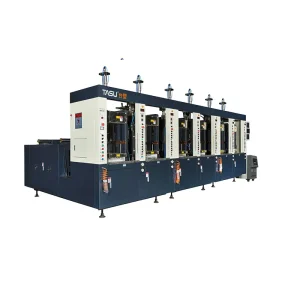
TPU Injection Molding Machine
TPU soles are typically produced using TPU injection molding machines, which are designed to handle the material’s higher processing requirements. Unlike TPR, TPU requires elevated temperatures (200°C–230°C) and higher injection pressure to ensure precise molding.
Advantages of TPU Machinery:
- High precision, ideal for complex sole designs (e.g., athletic shoe treads)
- Capable of maintaining consistent quality for premium products
- Durable construction to withstand high-temperature processing
- Suitable for producing small-batch, high-performance soles
5. Manufacturing Processes: TPR vs TPU
While both materials use injection molding as the core process, their specific steps differ due to varying material properties.
TPR Sole Manufacturing Process
- Material Preparation: TPR pellets are heated and mixed with additives (e.g., for enhanced flexibility) to form a homogeneous melt.
- Injection Molding: The molten TPR is injected into a mold via a TPR injection molding machine under moderate pressure.
- Cooling & Solidification: The mold is cooled quickly to set the TPR, ensuring the sole retains its shape.
- Finishing: The solidified sole is ejected, and excess material is trimmed. Optional steps include coloring or embossing.
TPU Sole Manufacturing Process
- Material Preparation: TPU pellets are heated to higher temperatures than TPR and mixed with plasticizers to adjust flexibility.
- Injection Molding: A TPU injection molding machine injects the molten material into the mold at high pressure, ensuring it fills all intricate details.
- Cooling & Solidification: Cooling time is longer than TPR due to TPU’s higher melting point, preventing warping.
- Finishing: The sole is ejected, trimmed, and may undergo post-processing (e.g., surface coating for extra abrasion resistance or branding).
6. Choosing Between TPR and TPU Soles
The decision between TPR and TPU hinges on your product’s target market, intended use, and budget. Below is a practical breakdown:
When to Choose TPR
- Budget Constraints: If producing affordable, mass-market footwear (e.g., casual sneakers, slippers), TPR’s low cost is unbeatable.
- Comfort-First Designs: TPR’s high flexibility prioritizes daily comfort for non-strenuous activities.
- Eco-Friendly Goals: Its recyclability helps reduce manufacturing waste.
When to Choose TPU
- High-Performance Needs: For athletic shoes, hiking boots, or industrial footwear, TPU’s durability and abrasion resistance are essential.
- Premium Branding: TPU aligns with high-end fashion or sports brands seeking long-lasting, quality products.
- Specialized Environments: Footwear used in chemical-exposed or high-friction settings benefits from TPU’s chemical and wear resistance.
Conclusion
The debate of TPR vs TPU sole ultimately comes down to balancing cost, performance, and purpose. TPR excels as a cost-effective solution for casual, everyday footwear, leveraging efficient TPR sole making machines and TPR injection molding machines for mass production. TPU, by contrast, is the superior choice for premium, high-stress applications, relying on specialized TPU injection molding machines to deliver precision and durability.