


Introduction
Neoprene injection molding is a specialized manufacturing process that combines the unique properties of neoprene rubber with the precision and efficiency of injection molding. Neoprene, a synthetic rubber, is widely recognized for its excellent chemical stability, resistance to heat, oil, and weathering, and remarkable elasticity. When molded through injection techniques, it allows manufacturers to produce complex shapes and high-performance components consistently and at scale.
The process is essential in industries ranging from automotive and aerospace to consumer goods and industrial machinery. Whether it’s a durable gasket for a car engine, a waterproof seal for electronics, or protective gear for sports and outdoor activities, neoprene injection molding ensures that these products meet stringent quality and performance standards.
Unlike traditional rubber processing methods such as compression or transfer molding, injection molding enables faster production cycles, higher dimensional accuracy, and reduced material waste. This combination of material versatility and manufacturing efficiency makes neoprene injection molding a critical technology for modern industrial applications.
In the sections that follow, we will explore what neoprene rubber is, what it’s made of, the injection molding process, and how it is used in real-world applications. By understanding these fundamentals, manufacturers, engineers, and product designers can make informed decisions to optimize their neoprene components for performance, cost, and durability.
What is Neoprene Rubber?
Neoprene rubber, also known as polychloroprene, is a type of synthetic rubber first developed by DuPont in the 1930s. It was designed to mimic the beneficial properties of natural rubber while providing superior chemical and environmental resistance. Over the decades, neoprene has become one of the most versatile elastomers used in a wide range of industrial and consumer applications.
Definition and History
Neoprene is a synthetic polymer derived from the polymerization of chloroprene (2-chloro-1,3-butadiene). Its development marked a significant breakthrough in the rubber industry because it offered performance advantages over natural rubber, particularly in areas exposed to heat, oil, and harsh chemicals. Today, neoprene is recognized as a reliable material for seals, gaskets, hoses, and protective equipment.
Physical and Chemical Properties
Neoprene rubber exhibits a unique combination of properties that make it highly suitable for injection molding:
- Elasticity: Neoprene maintains flexibility over a wide temperature range, allowing molded parts to stretch and return to their original shape.
- Chemical Resistance: It resists degradation from oils, solvents, and some acids, making it ideal for automotive and industrial applications.
- Thermal Stability: Neoprene can withstand moderate heat, typically up to 120°C (248°F) for prolonged periods, without losing performance.
- Weather Resistance: Unlike natural rubber, neoprene resists ozone, UV light, and weathering, which extends the lifespan of outdoor products.
Common Applications
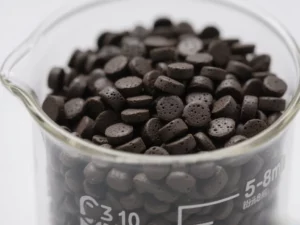
Neoprene’s robust properties make it widely applicable across industries:
- Automotive: Seals, gaskets, and vibration dampers.
- Consumer Products: Wetsuits, gloves, and protective cases.
- Industrial Equipment: Hoses, belts, and protective covers.
- Electronics: Waterproof seals and insulating components.
The Composition: What is Neoprene Made Of?
Understanding what neoprene is made of is essential for manufacturers and engineers who want to optimize the material for injection molding applications. Neoprene is primarily made from chloroprene, a synthetic monomer, and is compounded with various additives to achieve desired properties.
Chloroprene: The Primary Monomer
Chloroprene (2-chloro-1,3-butadiene) is the building block of neoprene. Through a polymerization process, chloroprene molecules link together to form polychloroprene chains. This polymer backbone gives neoprene its characteristic elasticity, durability, and resistance to environmental factors such as heat, ozone, and UV light.
Additives and Fillers
To enhance performance, neoprene compounds include a variety of additives:
- Stabilizers: Protect against aging caused by heat, oxygen, or UV light.
- Plasticizers: Increase flexibility and processability during molding.
- Fillers: Materials such as carbon black or silica improve tensile strength, abrasion resistance, and durability.
- Curing Agents: Enable cross-linking of polymer chains during the molding process to solidify the material and enhance mechanical properties.
Advantages Over Natural Rubber
Neoprene differs from natural rubber in several ways:
- Chemical Resistance: Natural rubber is prone to degradation from oils, fuels, and chemicals, while neoprene maintains stability.
- Temperature Performance: Neoprene can withstand higher temperatures and retains elasticity in cold conditions.
- Longevity: Neoprene resists weathering, ozone, and UV exposure better than natural rubber, making it ideal for outdoor and industrial applications.
Understanding Rubber Injection Molding
Rubber injection molding is a specialized manufacturing process used to produce high-precision rubber components, including those made from neoprene. Unlike traditional rubber molding methods, injection molding allows for faster production, consistent quality, and complex part geometries.
Basics of Rubber Injection Molding
In rubber injection molding, preheated rubber compounds—like neoprene—are injected into a closed mold under high pressure. The mold defines the final shape of the part, and heat or a curing agent triggers vulcanization, solidifying the material. This process ensures that every molded component meets exact specifications with minimal material waste.
Comparison with Other Molding Methods
- Compression Molding: Rubber is placed directly into a mold cavity and compressed. While simple, it often produces less precise parts and slower production rates.
- Transfer Molding: Rubber is preheated and forced into the mold through a sprue. It offers better control than compression molding but is still slower than injection molding.
- Injection Molding: Offers superior repeatability, faster cycle times, and the ability to create complex designs, making it ideal for industrial-scale production.
Key Benefits
- Precision: Achieves tight tolerances for critical components like seals and gaskets.
- Efficiency: Faster cycle times increase production capacity.
- Material Optimization: Reduces waste compared to other molding methods, lowering costs.
- Versatility: Capable of producing parts with complex geometries, undercuts, and varying wall thicknesses.
Rubber injection molding is particularly suited for neoprene because of the material’s elasticity and thermal stability. The combination of high-performance rubber and advanced molding technology enables manufacturers to produce durable, chemically resistant, and dimensionally accurate parts for various applications.
The Role of Rubber Injection Molding Machines
Rubber injection molding machines are the backbone of the injection molding process, determining the quality, consistency, and efficiency of molded neoprene products. Understanding these machines is essential for manufacturers who want to optimize production and maintain high standards.
Types of Rubber Injection Molding Machines
There are several types of machines used for rubber injection molding, each suited for different applications:
- Hydraulic Machines: Provide high clamping force and precise control of injection speed. Ideal for large or heavy-duty parts.
- Electric Machines: Offer energy efficiency, precise motion control, and reduced maintenance. Commonly used for small to medium-sized parts.
- Hybrid Machines: Combine hydraulic power with electric controls to achieve both speed and precision, balancing performance and energy efficiency.
Key Features of Injection Molding Machines
- Temperature Control: Maintains the neoprene at the correct preheating temperature for smooth injection and proper curing.
- Injection Speed and Pressure: Determines how the material fills the mold, affecting part accuracy and surface finish.
- Clamping Force: Keeps the mold closed during injection, preventing flash and ensuring dimensional accuracy.
- Automation Capabilities: Modern machines can integrate robotic arms and sensors for automated loading, unloading, and quality inspection.
Impact on Product Quality
The choice and setup of a rubber injection molding machine directly affect:
- Dimensional consistency of the molded parts
- Surface quality and appearance
- Material flow and curing uniformity
- Production efficiency and cycle times
By selecting the right machine and optimizing its parameters, manufacturers can produce high-quality neoprene components that meet demanding industrial and consumer requirements.
Step-by-Step Neoprene Injection Molding Process
The neoprene injection molding process transforms raw neoprene compounds into high-precision, durable components. Each stage is critical to ensure product quality, dimensional accuracy, and material performance.
-
Material Preparation and MixingBefore molding, neoprene rubber must be carefully compounded. This involves:
- Adding Fillers and Additives: Such as stabilizers, plasticizers, and curing agents to achieve the desired mechanical and chemical properties.
- Mixing: Using an internal mixer or a two-roll mill to create a homogeneous compound. Proper mixing ensures uniformity in elasticity, strength, and curing behavior.
-
Preheating the MaterialPreheating neoprene improves flowability and reduces injection pressure. This step ensures that the material fills the mold completely and evenly, minimizing defects like voids or incomplete filling.
-
Injection into the MoldThe preheated neoprene is injected under high pressure into a precisely designed mold. Critical parameters include:
- Injection Pressure: Must be sufficient to fill the mold without causing flash.
- Injection Speed: Controls how the material flows, impacting surface finish and part integrity.
- Mold Temperature: Maintained to allow proper material flow and initial curing.
-
Curing and VulcanizationOnce injected, the neoprene is vulcanized or cured. This involves cross-linking polymer chains to solidify the part and enhance its elasticity, strength, and chemical resistance. The duration and temperature of curing depend on the part design and material formulation.
-
Demolding and Post-ProcessingAfter curing, the molded part is removed from the mold. Post-processing may include:
- Trimming excess material (flash)
- Surface finishing or texturing
- Inspection for defects such as cracks, voids, or dimensional inaccuracies
-
Quality Control and InspectionFinal inspection ensures that each neoprene component meets specifications:
- Dimensional measurement
- Hardness and elasticity tests
- Visual inspection for surface defects
- Functional testing for seals or mechanical components
Common Applications of Neoprene Injection Molded Products
Neoprene injection molded components are widely used across various industries due to their flexibility, durability, and resistance to heat, chemicals, and weathering. The versatility of neoprene makes it ideal for both industrial and consumer applications.
-
Automotive Industry
- Seals and Gaskets: Neoprene’s chemical and temperature resistance make it perfect for engine gaskets, door seals, and window seals.
- Vibration Dampers: Molded neoprene parts reduce noise and vibration in vehicles.
- Hoses and Connectors: Durable neoprene hoses withstand oil, fuel, and heat exposure.
-
Consumer Products
- Sports and Outdoor Equipment: Wetsuits, gloves, knee pads, and protective gear rely on neoprene for flexibility and water resistance.
- Protective Cases: Molded neoprene covers protect electronics, cameras, and other devices from impact and moisture.
- Footwear and Insoles: Neoprene provides cushioning and comfort in shoes and boots.
-
Industrial Applications
- Hoses and Tubing: Resistant to chemicals and abrasion, neoprene hoses are used in factories and laboratories.
- Protective Covers: Machinery and equipment are protected from dust, chemicals, and weathering using molded neoprene components.
- Insulation Components: Neoprene’s thermal and electrical properties make it suitable for insulation and vibration isolation.
-
Electronics and Electrical Industry
- Waterproof Seals: Neoprene seals are used in electrical enclosures to prevent moisture ingress.
- Insulating Components: Flexible, durable neoprene parts provide insulation and mechanical protection for wiring and connectors.
Summary