


Introduction: What is Rubber Sole Foaming?
Rubber sole foaming is a key manufacturing process used to create lightweight, comfortable, and durable footwear soles. It involves using specialized rubber sole injection molding machines to shape rubber while simultaneously integrating a foaming agent. This produces a microcellular foam structure that maintains the strength and flexibility of solid rubber but at a much lower weight. These soles are widely used in sneakers, athletic shoes, and casual footwear for their superior cushioning and shock absorption. This article explains the foaming process, the central role of the rubber foaming machine, and the main benefits and considerations.
1. Rubber Compounding: Preparing the Mix for Foaming
The first step is compounding, where raw materials are mixed to create the specific rubber formula. This mix determines the final properties of the rubber sole, such as its durability, flexibility, and comfort.
- Natural vs. Synthetic Rubber: Natural rubber, from rubber trees, offers excellent elasticity and resilience. Synthetic rubber, derived from petrochemicals, provides enhanced resistance to heat, oils, and weathering. They are often blended.
- Key Mix Components:
- Blowing Agents: These are the essential chemicals that generate gas to create the foam structure during molding.
- Fillers: Materials like carbon black are added to improve strength, wear resistance, and durability.
- Additives: Plasticizers increase flexibility, while stabilizers maintain quality during processing. Curing agents are crucial for vulcanization, which gives the rubber its final elastic properties.
- Formulation: Precise proportions of each component are critical. The right balance ensures the foam expands correctly during molding, resulting in a rubber sole with the desired density, comfort, and longevity.
2. The Rubber Injection Molding Machine: Core of the Foaming Process
The prepared rubber compound is then processed by a rubber sole injection molding machine, which is the heart of the foaming operation. This machine precisely controls the injection, foaming, and shaping.
- Function: The machine heats and plasticizes the rubber compound, then injects it under high pressure into a closed mold. For foaming, the blowing agent is incorporated into the compound. As the hot rubber enters the mold cavity, the agent decomposes, releasing gas and forming a uniform foam structure throughout the rubber sole.
- Precision Control: The rubber foaming machine precisely regulates temperature, pressure, and injection speed. This control is vital for consistent foam cell formation, ensuring every sole has the same density, cushioning, and dimensional accuracy.
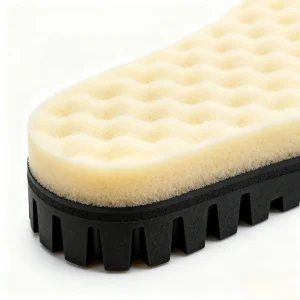
3. Shaping, Cooling, and Curing the Foam
- Shaping: Inside the mold, the expanding foam fills the entire cavity, taking on its precise shape, including detailed tread patterns and contours.
- Cooling: After injection, the mold is cooled (often via internal water channels) to solidify the foam structure, stabilize its shape, and prevent defects.
- Curing: Simultaneously or immediately after, the heat and pressure in the mold cause the rubber to vulcanize (cure). This cross-links the polymer chains, giving the foamed rubber sole its final elasticity, strength, and dimensional stability before it is demolded.
4. Key Advantages of the Foaming Process with Injection Molding
Using a rubber sole injection molding machine for foaming offers significant advantages:
- Lightweight & Durable: The foam structure drastically reduces weight without compromising the inherent strength and abrasion resistance of rubber, enhancing wearer comfort and reducing fatigue.
- Superior Comfort & Cushioning: The closed-cell foam acts as an excellent shock absorber, providing outstanding comfort and impact protection for the foot.
- Material & Cost Efficiency: The foaming process uses less raw material per sole compared to solid rubber, lowering material costs. The high-speed, automated nature of the rubber foaming machine also enables efficient mass production.
- Design Flexibility: Injection molding allows for complex, detailed sole designs with consistent quality, which are difficult to achieve with other methods.
Conclusion
The rubber sole foaming process, powered by advanced rubber sole injection molding machine technology, is a cornerstone of modern footwear manufacturing. By expertly combining rubber compounding, precision injection, and controlled foaming, this process produces soles that successfully balance the often-competing demands of lightness, durability, and comfort. The rubber foaming machine is indispensable, enabling efficient, consistent, and cost-effective production of high-performance soles that meet the needs of today’s consumers and manufacturers alike.