


In the grand picture of the footwear industry, the production of rubber soles is undoubtedly a cornerstone of its technical foundation. Rubber has long been the primary material for manufacturing high-performance rubber soles due to its excellent wear resistance, slip resistance, and high flexibility. From classic shoes to high-end basketball sneakers, rubber soles carry people with every step they take in the world. Behind all this is a series of precise and complex molding processes. This article delves deeply into several core molding techniques for rubber soles, focusing on how modern rubber injection molding machines have revolutionized the appearance of the industry.
1. Cornerstone Process: Molding
Molding is the traditional and most widely used process in rubber products, with a long history in the production of rubber soles.
Process Analysis
The process is akin to “baking a cake.” First, the mixed rubber compound is pressed into sheets through a roller and then cut into a specific weight and shape using a knife. Operators place the compounds into a pre-heated mold cavity, which is typically heated to a vulcanization temperature (usually around 150-160 °C). A hydraulic machine then exerts pressure on the upper and lower molds, generating hundreds of tons of force. Under the dual effects of high temperature and high pressure, the compound begins to soften and flow, quickly filling every fine cavity of the mold while a critical sulfur cross-linking reaction occurs. After the designated vulcanization time (which can range from a few minutes to over ten minutes), the molded rubber sole can be removed.
The process is akin to “baking a cake.” First, the mixed rubber compound is pressed into sheets through a roller and then cut into a specific weight and shape using a knife. Operators place the compounds into a pre-heated mold cavity, which is typically heated to a vulcanization temperature (usually around 150-160 °C). A hydraulic machine then exerts pressure on the upper and lower molds, generating hundreds of tons of force. Under the dual effects of high temperature and high pressure, the compound begins to soften and flow, quickly filling every fine cavity of the mold while a critical sulfur cross-linking reaction occurs. After the designated vulcanization time (which can range from a few minutes to over ten minutes), the molded rubber sole can be removed.
Advantages and Limitations of the Process
The greatest advantage of the molding process is its flexibility and low initial investment. The costs of molds are relatively low, making it suitable for small batches and diverse production models, which is why many custom models or miniature shoes still use this process. Additionally, by employing a secondary vulcanization process (first vulcanizing the rubber sole and then placing it with the shoe upper into another mold for a second vulcanization), an unparalleled bond strength between the rubber sole and the shoe upper can be achieved, which is common in footwear with high durability requirements, such as work boots and safety shoes.
The greatest advantage of the molding process is its flexibility and low initial investment. The costs of molds are relatively low, making it suitable for small batches and diverse production models, which is why many custom models or miniature shoes still use this process. Additionally, by employing a secondary vulcanization process (first vulcanizing the rubber sole and then placing it with the shoe upper into another mold for a second vulcanization), an unparalleled bond strength between the rubber sole and the shoe upper can be achieved, which is common in footwear with high durability requirements, such as work boots and safety shoes.
However, its disadvantages are also quite evident: low production efficiency, significant dependence on manual placement of the compound, lengthy vulcanization cycles; and inevitably, the formation of flash (excess material) after molding, which requires additional trimming processes, increasing labor costs.
2. Efficiency Revolution: Rubber Injection Molding Machines
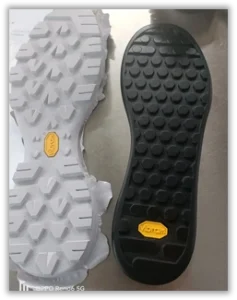
To overcome the efficiency bottlenecks of molding, a highly automated rubber injection molding process emerged and gradually became the mainstream choice for mass production. The core equipment of this process is rubber injection molding machines.
Working Principle of the Rubber Injection Molding Machine
The rubber injection molding process fundamentally differs from traditional molding. The process does not involve placing cold compounds into a hot mold; instead, a pre-mixed ribbon or granular compound is fed into the rubber injection molding machine’s barrel. Through heating and the rotation of the screw, the generated shear heat preheats the compound to a plastic state, close to the vulcanization temperature (this process is referred to as plasticization). The screw then injects the molten compound into the closed mold under extremely high pressure (injection pressures can exceed 1500 bars) through a nozzle and mold runner system.
The rubber injection molding process fundamentally differs from traditional molding. The process does not involve placing cold compounds into a hot mold; instead, a pre-mixed ribbon or granular compound is fed into the rubber injection molding machine’s barrel. Through heating and the rotation of the screw, the generated shear heat preheats the compound to a plastic state, close to the vulcanization temperature (this process is referred to as plasticization). The screw then injects the molten compound into the closed mold under extremely high pressure (injection pressures can exceed 1500 bars) through a nozzle and mold runner system.
The mold itself remains at a high temperature. The compound absorbs heat from the mold in a very short time once the mold is filled, and the sulfur cross-linking reaction occurs rapidly. The entire process—from injection to pressure maintenance and vulcanization—can be completed within seconds, resulting in a fully formed rubber sole with minimal flash upon mold opening.
Significant Advantages of the Rubber Injection Molding Process
-
Excellent Production Efficiency: Automated continuous production with a very short cycle time; rubber injection machines can produce thousands of pairs of rubber soles per day, far exceeding traditional molded production lines.
-
Excellent Product Quality: Machines precisely control the injection amount, pressure, and temperature, ensuring stable product dimensions, uniform density, and consistent physical properties. Flash is rare, and the appearance is aesthetically pleasing.
-
Implementation of Complex Structures: High-pressure injections ensure that the compound perfectly fills very intricate patterns and fine structures, meeting designers’ aspirations for extreme grip and complex designs.
-
Multi-Color / Multi-Material Composite Design: This is one of the most notable features of rubber injection molding technology. Two- or three-color rubber injection molding machines and complex mold systems allow for the creation of composite rubber soles made from different colors or even different materials (such as rubber with varying hardness) in a single injection, significantly enhancing product aesthetics and functionality while saving on subsequent assembly steps.
Challenges
The biggest hurdle of this process is its high initial investment. The costs of rubber soles and the associated molds are very high. Therefore, it is only applied in scenarios of stable, mass production orders to ensure that production capacity is fully utilized and to reduce the costs of individual products.
The biggest hurdle of this process is its high initial investment. The costs of rubber soles and the associated molds are very high. Therefore, it is only applied in scenarios of stable, mass production orders to ensure that production capacity is fully utilized and to reduce the costs of individual products.
3. Foundation and Combination: Sheet Vulcanization and Cold Bonding Process
In addition to the two aforementioned core molding methods, there are two important related processes.
Vulcanization Process
This is a more fundamental vulcanization method typically used for producing components of simple structure rubber soles. It involves placing the compound between two flat heating plates for vulcanization, resulting in a uniform rubber sheet that is later cut into the shape of the rubber sole using a die. It is primarily used for producing midsole seals, shoe pads, or certain casual footwear rubber soles and cannot produce complex three-dimensional structures.
This is a more fundamental vulcanization method typically used for producing components of simple structure rubber soles. It involves placing the compound between two flat heating plates for vulcanization, resulting in a uniform rubber sheet that is later cut into the shape of the rubber sole using a die. It is primarily used for producing midsole seals, shoe pads, or certain casual footwear rubber soles and cannot produce complex three-dimensional structures.
Cold Bonding Process: Mainstream Combination
Cold bonding itself is not a rubber sole molding process but rather a mainstream combination of the rubber sole and the shoe upper. Regardless of whether the rubber sole is produced through molding or rubber injection molding, most end up assembling complete shoes using “cold bonding” to the shoe upper.
Cold bonding itself is not a rubber sole molding process but rather a mainstream combination of the rubber sole and the shoe upper. Regardless of whether the rubber sole is produced through molding or rubber injection molding, most end up assembling complete shoes using “cold bonding” to the shoe upper.
The process is as follows: first, the rubber sole and shoe upper are produced independently, then the edges of the rubber sole and the corresponding surfaces of the shoe upper are ground, treated, and coated with a special high-strength adhesive. Once activated in an oven, the two components are pressed tightly together and left for a period to ensure a strong bond. This “before and after” model significantly enhances production flexibility, allowing shoe factories and rubber soles to specialize in division of labor and become a mainstream practice in modern footwear manufacturing.
4. Process Selection: Integrated Considerations and Application Scenarios
How does a manufacturer choose among different processes? This depends on a comprehensive decision-making matrix:
-
Order Quantity and Costs: For large quantities and standard style orders, rubber injection molding is prioritized for its efficiency. Smaller batches, multiple varieties, or sampling stages are more economically produced via molding.
-
Design Complexity: Simple one-color rubber soles can utilize both methods. However, for multi-color or multi-material composites, rubber injection molding is the only integrated solution.
-
Performance Requirements: For extreme strength requirements (such as heavy-duty work boots), molded dual vulcanization is a more reliable choice. For wear-resistant, slip-resistant, lightweight, and other athletic shoes, rubber injection molded soles better meet high-performance demands.
In practical applications, we can see a clear distribution: classic Converse shoes and retro basketball sneakers, such as early versions of Air Jordan 1, have rubber soles that are predominantly molded; modern mainstream sports brands like Nike and Adidas use high-performance rubber injection molded soles for most of their running and basketball shoes, which feature complex designs.
Conclusion
From the handcrafting experience of traditional molding processes to the precisely controlled rubber injection molding machines, the history of rubber sole molding reflects a development of efficiency, precision, and innovation. The rubber injection molding machine, at the core of this transformation, has not only significantly improved production capacity but also opened up unprecedented design freedom, allowing designers’ imaginations to be realized through complex multi-colored rubber soles. While the traditional molding process remains flexible in certain areas, there is no doubt that rubber injection molding represents the current and future direction of rubber sole manufacturing, continuing the footwear industry’s ongoing advancement toward a more efficient, higher quality, and innovative future.