


1. Introduction
Overview of Rubber Molding Techniques
2. What is a Rubber Transfer Moulding Machine?
Definition and Process
- Loading: The raw rubber is placed into a transfer pot or chamber.
- Heating: The rubber is heated to a specific temperature to soften it and make it flowable.
- Transfer: The heated rubber is transferred into the mold cavity under high pressure.
- Curing: The rubber is cured in the mold, typically by heating it to a specific temperature for a set amount of time.
Key Advantages of Rubber Transfer Molding
- Precision and Detail: Transfer molding is ideal for parts that require fine details and high precision, as the rubber is forced into every nook and cranny of the mold.
- Complex Shapes: This method can accommodate intricate mold designs and multi-part molds, making it suitable for producing complex and detailed rubber components.
- Customizability: Transfer molding allows for greater flexibility in design, making it a good option for customized parts.
Common Applications
- Automotive Industry: Used to create gaskets, seals, and vibration dampers.
- Electrical and Aerospace: Components like insulation parts and connectors benefit from transfer molding’s precision and ability to handle intricate designs.
- Consumer Goods: Items like rubber handles, grips, and various rubberized products leverage transfer molding’s fine detail capabilities.
3. What is a Rubber Injection Molding Machine?
Definition and Process
- Heating: The rubber material is heated to a specific temperature inside the injection unit.
- Injection: The rubber is injected into the mold cavity under high pressure.
- Curing: The rubber is allowed to cure in the mold, with heat applied to ensure the material hardens and takes the shape of the mold.
Key Advantages of Rubber Injection Molding
- Speed and Efficiency: Injection molding is faster, with shorter cycle times compared to transfer molding, making it ideal for high-volume production.
- Automation Integration: The process is easily automated, allowing for continuous production with minimal human intervention.
- Consistency: The injection molding process is known for producing consistent, high-quality parts with tight tolerances.
Common Applications
- Medical Devices: Used to create medical rubber components such as seals, gaskets, and tubes.
- Consumer Products: Rubber items like footwear, toys, and sporting goods benefit from the speed and cost-effectiveness of injection molding.
- Automotive: Injection molding is utilized in the production of rubber seals, gaskets, and other molded components for vehicles.
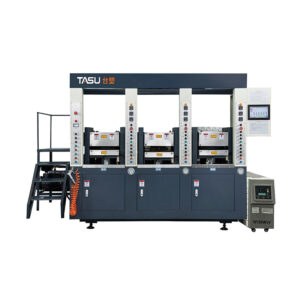
4. Differences Between Rubber Transfer Moulding and Rubber Injection Molding Machines
Process Comparison
- Rubber Transfer Molding: Typically slower but ideal for producing detailed, small-volume parts with complex geometries.
- Rubber Injection Molding: Faster and more efficient, making it ideal for large-volume production of standardized parts.
Material Considerations
- Rubber Transfer Molding: Best suited for thermoset rubbers and materials that require high precision.
- Rubber Injection Molding: Works well with both thermoset and thermoplastic rubbers, allowing for more flexibility in material selection.
Speed and Efficiency
Cost Comparison
Precision and Customization
Pros and Cons of Rubber Transfer Moulding Machine vs Rubber Injection Molding Machine
| Feature | Rubber Transfer Molding | Rubber Injection Molding |
|---|---|---|
| Precision | High precision, ideal for complex parts | Less precise, but efficient for standardized parts |
| Speed | Slower cycle time | Faster cycle time |
| Cost | Lower setup costs, but higher per-part cost for small runs | Higher initial cost, but lower per-part cost for mass production |
| Flexibility | Highly customizable molds | Suitable for high-volume production of standard parts |
| Automation | Requires more manual labor | Easily automated for continuous production |
5. Which Machine Should You Choose for Your Manufacturing Needs?
Considerations for Selecting the Right Machine
- Volume: If you need to produce parts in large quantities, injection molding is often the better choice due to its speed and automation capabilities.
- Complexity: For parts with intricate designs, transfer molding offers better precision and detail.
- Cost: For high-volume production, injection molding offers lower per-part costs, while transfer molding is better suited for lower-volume and custom parts.
When to Choose Rubber Transfer Molding
- When producing custom, low-volume parts with high precision.
- When parts require intricate details or multi-part molds.
When to Choose Rubber Injection Molding
- When high-volume production is needed.
- When parts can be standardized and the focus is on cost-efficiency.
Summary
When choosing a rubber molding machine, it is crucial to understand the differences between rubber transfer molding and rubber injection molding. These two forming methods each have their unique advantages and applicable scenarios. Rubber transfer molding is suitable for low-volume custom parts that require high precision and complex designs, and is capable of handling meticulous details and multi-component molds. Rubber injection molding, with its faster production speed and automation capabilities, has become an ideal choice for high-volume standardized parts.
When considering production demands, manufacturers should assess factors such as production volume, part complexity and cost. For mass production, injection molding offers a more cost-effective solution, while transfer molding performs well in both custom and small-batch production. By understanding the characteristics of these two forming technologies, manufacturers can make informed choices to meet their specific production needs.