

Introduction: Understanding Injection Moulding Technology
Injection moulding is among the most prevalent manufacturing processes for producing plastic and rubber components across various industries, including automotive, electronics, medical devices, and consumer goods. Central to this process is the injection moulding machine, a crucial piece of equipment that influences efficiency, product quality, and overall production costs.
When investing in injection moulding technology, businesses often face a critical choice between a fully automatic injection moulding machine and a semi automatic injection moulding machine. While both serve the fundamental purpose of transforming raw materials into finished parts, their operation, efficiency, and cost-effectiveness differ significantly.
A fully automatic moulding machine relies on advanced automation, requiring minimal human intervention, and is designed for high-volume, continuous production. In contrast, a semi auto injection moulding machine combines automation with manual tasks, making it more suitable for smaller-scale production or businesses with flexible manufacturing needs.
This article explores the distinctions, benefits, and limitations of each machine type, with a particular focus on applications such as the fully automatic rubber injection moulding machine, to help you make an informed decision for your business.
1. What is a Fully Automatic Injection Moulding Machine?
A fully automatic injection moulding machine is a high-precision, computer-controlled system designed to perform every stage of the moulding process without the need for manual intervention. Once the raw material is loaded into the hopper, the machine manages heating, injecting, cooling, part removal, and even quality control in some advanced models. This makes it the preferred choice for industries that demand efficiency, consistency, and large-scale production.
How It Works
The machine follows a fully automated cycle, which includes:
- Material Feeding: Granules or rubber compounds are automatically fed into the heated barrel.
- Injection: The molten material is injected into the mould cavity at controlled pressure and speed.
- Cooling and Solidification: Automated cooling systems ensure optimal solidification without operator assistance.
- Ejection and Handling: Parts are ejected automatically, often using robotic arms or conveyor belts for collection.
Key Features
- Advanced automation controls with PLC or CNC systems.
- Minimal human involvement in operation and part handling.
- High-speed production cycles, reducing time per moulding cycle.
- Enhanced safety systems to protect both the machine and operators.
Applications
Fully automatic machines are especially vital in industries where mass production is critical and precision cannot be compromised. Common use cases include:
- Automotive parts (dashboards, bumpers, seals).
- Medical devices requiring sterile, consistent production.
- Consumer electronics housings where precision is essential.
- Rubber components using fully automatic rubber injection moulding machines, widely used in seals, gaskets, and O-rings.
2. What is a Semi Automatic Injection Moulding Machine?
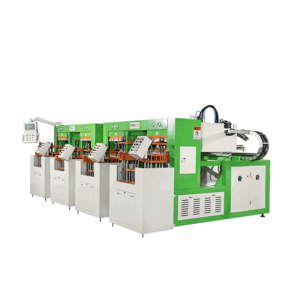
A semi automatic injection moulding machine is a hybrid system that combines automation with manual intervention. Unlike a fully automatic moulding machine, it automates certain key stages of the moulding process—such as material injection and mould clamping—while relying on an operator for tasks like product removal or mould resetting. This balance makes the semi auto injection moulding machine a practical option for businesses that need flexibility without the higher cost of full automation.
How It Works
The machine cycle typically involves:
- Material Loading and Injection: Performed automatically, similar to a fully automatic system.
- Cooling Process: Controlled by the machine but may require operator monitoring.
- Product Removal: Operators manually open the mould and remove finished parts.
- Mould Resetting: The operator ensures the mould is clean and ready for the next cycle.
Key Features
- Partial automation, with certain steps requiring manual labor.
- Lower initial investment cost compared to fully automatic machines.
- Simple design, reducing complexity and maintenance needs.
- Flexible operation, allowing quick adjustments for small-batch production.
Applications
Semi automatic injection moulding machines are widely used in scenarios where production demand is lower or when products require more hands-on finishing. Typical use cases include:
- Custom plastic components for niche markets.
- Prototype development where frequent mould changes are necessary.
- Small and medium enterprises (SMEs) that cannot justify the higher upfront investment in full automation.
- Rubber and plastic household goods where manual inspection and finishing are common.
3. Key Differences Between Fully Automatic and Semi Automatic Injection Moulding Machines
Choosing between a fully automatic injection moulding machine and a semi automatic injection moulding machine requires a clear understanding of their differences in terms of automation, efficiency, cost, and production outcomes. Below is a detailed comparison highlighting their distinctions.
| Feature | Fully Automatic Injection Moulding Machine | Semi Automatic Injection Moulding Machine |
|---|---|---|
| Automation Level | Operates with minimal human intervention. | Automates only certain stages. |
| Labor Involvement | Requires fewer operators. | Needs constant operator involvement. |
| Cycle Time Efficiency | Delivers shorter, consistent cycle times. | Cycle times vary, depending on operator speed. |
| Precision and Consistency | Maintains uniform product quality. | Quality can fluctuate due to manual handling. |
| Cost and Investment | Higher upfront investment. | Lower purchase cost. |
| Maintenance and Training | Requires specialized training. | Easier to operate and maintain. |
| Scalability | Best for large-scale production. | Suitable for small- to medium-scale production. |
4. Advantages of Fully Automatic Injection Moulding Machines
A fully automatic injection moulding machine offers numerous benefits, making it the preferred choice for companies with high production demands and a focus on precision. Below are the key advantages that set it apart.
-
High Production Efficiency: Fully automatic machines are designed for continuous operation. By eliminating manual steps, they achieve faster cycle times, translating into greater output in less time.
-
Consistency and Precision: Computer-controlled systems ensure that every cycle is identical, maintaining precise control over injection pressure, temperature, and cooling times. This is crucial for industries like medical devices and aerospace.
-
Reduced Labor Costs: Minimal operator involvement allows businesses to lower labor expenses significantly. A single technician can oversee multiple machines, offsetting the higher initial investment.
-
Enhanced Safety: With reduced manual involvement, workplace accidents decrease. Built-in safety systems ensure both operators and equipment remain safe during production.
-
Scalability for Large-Scale Production: Fully automatic injection moulding machines enable businesses to scale up production without increasing labor costs proportionally.
-
Compatibility with Advanced Technologies: Many modern systems can integrate with robotic arms, conveyors, and smart factory technologies, enabling real-time monitoring and data-driven decision-making.
-
Suitable for Rubber and Specialized Applications: The fully automatic rubber injection moulding machine is essential for manufacturing seals, gaskets, O-rings, and other rubber products where precision and efficiency are critical.
5. Advantages of Semi Automatic Injection Moulding Machines
While fully automatic systems dominate large-scale production, a semi automatic injection moulding machine has its own strengths, making it attractive for small and medium-sized businesses.
-
Lower Initial Investment: The purchase price of a semi automatic machine is significantly lower than that of a fully automatic model, making it practical for startups or SMEs.
-
Flexibility for Small-Batch Production: Semi automatic systems are ideal for companies that do not require mass production, allowing quick adjustments for different moulds and product requirements.
-
Easier Maintenance and Operation: The simpler design means fewer complex components that require expert maintenance, reducing downtime and lowering costs.
-
Greater Control Over Production: Operators can spot defects and make adjustments in real time, ensuring better quality control, particularly useful for prototype development.
-
Cost-Effective for Low-Volume Applications: When production demand is low, a semi auto injection moulding machine keeps operational costs manageable.
-
Suitable for Training and Workforce Development: These machines are often used in training environments to teach operators about the injection moulding process.
6. Disadvantages of Both Systems
Both fully automatic and semi automatic injection moulding machines come with unique limitations. Understanding these drawbacks is essential before making an investment decision. The following table summarizes the disadvantages of each system:
| Disadvantages | Fully Automatic Injection Moulding Machine | Semi Automatic Injection Moulding Machine |
|---|---|---|
| High Upfront Cost | Significantly higher purchase price can be prohibitive for small businesses. | Lower purchase price makes it more accessible. |
| Complex Setup and Training | Requires advanced training for operation and maintenance, increasing workforce development costs. | Easier to operate with basic training needed. |
| Maintenance Costs | More complex components lead to higher spare parts and servicing costs. | Simpler design results in lower maintenance costs. |
| Not Suitable for Small-Scale Production | Efficiency advantages are underutilized for limited production runs. | Slower production speed due to operator involvement. |
| Higher Long-Term Labor Costs | Minimal operator involvement reduces labor costs over time. | Continuous operator involvement keeps labor costs elevated. |
| Inconsistent Product Quality | Maintains uniform product quality due to automation. | Manual handling can introduce variability, leading to defects. |
| Limited Scalability | Best for large-scale production; may not be cost-effective for smaller operations. | Not designed for high-volume production, limiting growth potential. |
7. Choosing the Right Machine for Your Business
Selecting between a fully automatic injection moulding machine and a semi automatic injection moulding machine involves aligning production needs, workforce availability, and long-term goals. The right choice can significantly impact efficiency, quality, and return on investment.
-
Consider Your Production Volume:
- High-volume, continuous production → A fully automatic injection moulding machine is the clear choice.
- Low-volume or custom production → A semi auto injection moulding machine offers more flexibility.
-
Assess Your Budget:
- If you can afford a higher upfront investment, a fully automatic system will pay off with long-term labor savings.
- If you have limited capital, a semi automatic system allows entry into the market without overspending.
-
Evaluate Workforce and Skills:
- Fully automatic machines require skilled technicians for setup and maintenance.
- Semi automatic machines are simpler to operate, making them suitable for general operators.
-
Product Type and Application:
- For high precision and strict quality standards, choose a fully automatic machine.
- For custom designs or prototypes, a semi auto injection moulding machine allows manual control.
-
Long-Term Scalability:
- For companies planning to expand, investing in a fully automatic system ensures you won’t outgrow your capacity.
- For businesses remaining niche or low-volume, a semi automatic option may be sufficient.
Conclusion: Striking the Balance
Both fully automatic injection moulding machines and semi automatic injection moulding machines play vital roles in modern manufacturing. The decision isn’t about which is universally better—it’s about which is better for your specific business goals.
automatic injection moulding machine delivers speed, consistency, and scalability, making it ideal for companies focused on high-volume production and precision-driven industries like automotive, electronics, and medical devices.
On the other hand, a semi auto injection moulding machine provides affordability, flexibility, and ease of use—perfect for startups, SMEs, and businesses producing small batches or custom parts.
Ultimately, the best choice depends on how you balance budget, workforce, production demands, and long-term strategy. Whether you invest in a fully automatic or semi automatic system, aligning your decision with your business model ensures greater productivity and competitiveness in today’s fast-paced market.