

Introduction
In modern manufacturing, rubber injection molding stands as a cornerstone technology, revolutionizing how high-quality rubber parts are produced at scale. From automotive components to medical devices, this process bridges precision, efficiency, and versatility—making rubber injection molding machines indispensable for industries worldwide. This guide dives deep into the fundamentals of rubber injection molding, the materials it uses, the advantages of injection molding machines, and their most popular applications.
What is Rubber Injection Molding?
Process Explanation
Rubber injection molding is a manufacturing technique that follows three core steps:
- Melting: Rubber material is heated to a molten state in the barrel of rubber injection molding machines.
- Injection: The molten rubber is forced under high pressure into a pre-heated mold cavity, ensuring it fills every detail of the mold.
- Solidification: The rubber cools and hardens inside the mold, taking on the exact shape of the cavity. Once set, the mold opens, and the finished part is ejected.
This streamlined process eliminates manual intervention, ensuring consistency across every production run.
Comparison with Traditional Methods
Unlike traditional molding techniques (e.g., compression molding), rubber injection molding offers critical advantages:
- Higher Precision: High-pressure injection ensures the rubber fills intricate mold details, reducing defects (e.g., air bubbles, uneven thickness) common in compression molding.
- Better Uniformity: Injection molding machines control temperature, pressure, and material flow with precision, resulting in parts with consistent dimensions and material properties.
- Scalability: Ideal for mass production—once the mold is set up, rubber injection molding machines can produce hundreds or thousands of parts per hour, far faster than traditional methods.
- Complexity: Easily handles complex part geometries (e.g., embedded inserts, multi-material designs) that are costly or impossible to achieve with compression molding.
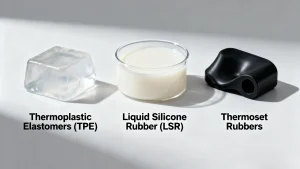
Types of Rubber Materials Used in Injection Molding
Rubber injection molding machines are compatible with a wide range of rubber compounds, each tailored to specific industry needs:
Thermoplastic Elastomers (TPE)
- Properties: Combines rubber-like flexibility with the processability of thermoplastics. Offers excellent durability, chemical resistance, and low-temperature flexibility.
- Applications: Automotive seals, medical device grips, consumer goods (e.g., kitchen utensil handles), and sports equipment.
- Why It Works: TPE can be reprocessed (recycling excess material), making it cost-effective for injection molding machines.
Liquid Silicone Rubber (LSR)
- Properties: Heat-resistant (up to 200°C), biocompatible (safe for medical use), and resistant to moisture, oils, and chemicals. Remains flexible even at extreme temperatures.
- Applications: Medical devices (e.g., catheter components, surgical seals), automotive gaskets (engine compartments), and baby products (teethers, bottle nipples).
- Why It Works: LSR’s low viscosity flows easily into complex molds—rubber injection molding machines precisely control its curing process to ensure biocompatibility.
Thermoset Rubbers
- Properties: Undergoes permanent curing when heated (cannot be reprocessed). Offers exceptional heat resistance, chemical stability, and mechanical strength.
- Applications: High-performance parts like automotive engine gaskets, industrial O-rings, and electrical insulators.
- Why It Works: Injection molding machines optimize the curing cycle for thermoset rubbers, ensuring they harden into rigid, long-lasting components that withstand harsh conditions.
Key Benefits of Rubber Injection Molding Machines
Investing in rubber injection molding machines delivers long-term value for manufacturers, thanks to these core advantages:
High Precision and Efficiency
- Tight Tolerances: Injection molding machines achieve tolerances as low as ±0.005 inches, critical for industries like automotive (where part fit affects safety) and medical (where precision prevents contamination).
- Fast Cycle Times: Automation reduces setup and production time—cycle times can be as short as 30 seconds for small parts, cutting lead times for large orders.
- Consistency: Computer-controlled processes eliminate human error, ensuring every part matches design specifications (no variation between the first and 10,000th unit).
Cost-Effectiveness and Versatility
- Reduced Waste: Rubber injection molding machines inject only the amount of rubber needed for the part—excess material can be recycled (for TPE) or minimized, lowering material costs.
- Low Long-Term Costs: While initial investment in injection molding machines and molds is higher, the efficiency of mass production drives down per-unit costs over time.
- Multi-Material Compatibility: A single rubber injection molding machine can process TPE, LSR, and thermoset rubbers (with minor adjustments), eliminating the need for multiple machines for different materials.
Customization of Rubber Products
- Intricate Designs: Molds for injection molding machines can include fine details (e.g., logos, texturing, undercuts) that enhance product functionality or aesthetics.
- Tailored Properties: By adjusting rubber compounds (e.g., adding fillers for strength, UV stabilizers for outdoor use), manufacturers can create parts with unique properties for specific applications.
- Multi-Component Molding: Advanced rubber injection molding machines can integrate multiple materials (e.g., hard plastic and soft rubber) in one cycle, producing complex parts like overmolded grips or sealed connectors.
Popular Products Produced by Rubber Injection Molding Machines
Rubber injection molding machines power production across industries, creating parts that combine durability, precision, and performance:
Automotive Components
The automotive industry relies heavily on rubber injection molding for parts that ensure safety and comfort:
- Seals and Gaskets: Prevent fluid/gas leakage in engines, doors, and windows (made from LSR or thermoset rubbers for heat resistance).
- Vibration Dampeners: Reduce engine and suspension noise (TPE-based, for flexibility and durability).
- Bushings: Minimize friction in suspension systems (thermoset rubbers, for strength under pressure).
Medical Devices
Biocompatibility and precision are non-negotiable in healthcare—rubber injection molding machines deliver both:
- Medical Tubing: Flexible, sterile tubes for IV drips or catheters (LSR, to meet FDA biocompatibility standards).
- Seals and Diaphragms: Prevent contamination in pumps or valves (LSR, resistant to sterilization chemicals).
- Device Grips: Ergonomic, non-slip handles for surgical tools (TPE, for comfort and chemical resistance).
Consumer Goods
Everyday items often rely on rubber injection molding for durability and comfort:
- Kitchen Tools: Rubber spatulas, container seals, and utensil grips (TPE, food-safe and heat-resistant).
- Footwear Components: Soles, inserts, and heel grips (TPE or thermoset rubbers, for traction and cushioning).
- Electronics Accessories: Phone case bumpers, headphone ear pads (TPE, for shock absorption and flexibility).
Industrial Applications
Industrial parts must withstand harsh conditions—rubber injection molding machines produce components that deliver:
- O-Rings and Gaskets: Seal pipelines and hydraulic systems (thermoset rubbers, resistant to oils and high pressure).
- Grommets: Protect wires from abrasion in machinery (TPE, flexible and durable).
- Vibration Isolators: Reduce noise in industrial pumps (thermoset rubbers, for long-term stability).
Electrical Components
Electrical parts need insulation and protection—rubber injection molding meets these needs:
- Cable Insulators: Shield wires from moisture and electrical interference (thermoset rubbers, for heat resistance).
- Rubber Housings: Protect electronic devices (e.g., sensors) from shock and dust (TPE, lightweight and impact-resistant).
- Connector Boots: Seal electrical connections (LSR, resistant to environmental damage).
Conclusion
Rubber injection molding—powered by advanced rubber injection molding machines—is more than a manufacturing process: it’s a driver of innovation across industries. From its ability to produce precise, complex parts at scale to its compatibility with diverse materials (TPE, LSR, thermoset rubbers), it solves key challenges for manufacturers seeking efficiency, cost-effectiveness, and customization.
Whether creating life-saving medical devices, durable automotive components, or everyday consumer goods, injection molding machines remain a critical investment for businesses looking to stay competitive in modern manufacturing. As technology advances, these machines will only become more versatile—expanding the possibilities of what rubber parts can achieve.