


Introduction: What Are Sole Machines?
In the footwear manufacturing industry, the production of high-quality, durable, and comfortable soles is critical. Sole machines form the backbone of this process, shaping, molding, and crafting shoe soles with precision and efficiency. They have revolutionized production, enabling manufacturers to meet diverse demands for sports shoes, fashion footwear, safety boots, and orthopedic designs.
Sole machines, particularly sole injection molding machines, process materials like rubber, EVA (Ethylene Vinyl Acetate), PU (Polyurethane), and TPU (Thermoplastic Polyurethane). These machines heat raw materials to a molten state and inject them into molds to form the desired sole shape, resulting in a product with exceptional durability, comfort, and flexibility.
The sole injection molding process is essential for ensuring shoes provide both style and performance. Advancements in technology have made these machines more efficient, cost-effective, and capable of high-volume production, making them a vital investment.
This article explores the different types of sole machines, focusing on their features, benefits, and applications. Whether a manufacturer aims to improve production or a business seeks to invest in quality equipment, understanding these machines and their capabilities supports informed decision-making.
Types of Sole Machines
Sole machines are designed for different materials and production needs, each with a unique method of forming soles. Below are the most common types used in modern footwear production.
1. Sole Injection Molding Machines (for Rubber, EVA, PU, TPU)
Sole injection molding machines are pivotal in modern manufacturing. They melt raw materials—rubber, EVA, PU, and TPU—and inject them into a mold to create the sole shape. This process allows for high precision, design flexibility, and scalability, making it preferred for large-scale production.
How Injection Molding Works
The process begins by heating the raw material to a molten state. This material is then injected into a mold under high pressure, taking the shape of the mold cavity. After cooling and solidifying, the finished sole is ejected. Molds can produce soles of varying complexity, from basic flats to intricate treads.
Advantages of Sole Injection Molding Machines
- Precision and Detail: The process produces highly precise soles with consistent quality, accurately replicating details like traction grooves.
- Material Flexibility: These machines work with a wide range of materials. Rubber offers durability, EVA provides lightweight comfort, PU ensures flexibility, and TPU delivers high performance. This allows tailoring soles to specific requirements for cushioning, durability, and traction.
- Cost-Effectiveness for Mass Production: After mold creation, the process is cost-effective for large-scale runs. Automation reduces labor costs, reusable molds minimize waste, and high speed decreases lead times.
- Enhanced Durability and Comfort: The process excels at producing soles that combine strength and comfort. Material selection and precision molding meet the performance demands of various shoe categories.
Applications
Sole injection molding machines create soles for:
- Sports Footwear: Running, basketball, and soccer shoes require durable, flexible, lightweight soles.
- Casual and Fashion Footwear: Casual shoes, boots, and sandals feature comfortable, stylish soles from materials like EVA and PU.
- Safety Footwear: Construction, manufacturing, and mining boots need slip-resistant, durable soles for harsh conditions.
- Orthopedic Footwear: Medical shoes require soles with comfort, cushioning, and support, often from softer materials like EVA.
Why Choose Sole Injection Molding Machines?
Tasu stands out as a top choice for footwear manufacturers. Tasu’s injection molding machines are recognized for their precision, flexibility, and energy efficiency. Whether producing rubber soles for safety boots or EVA soles for casual shoes, Tasu’s machines provide the versatility to meet diverse production needs. Their commitment to quality and reliability makes them a trusted partner for enhancing production processes.
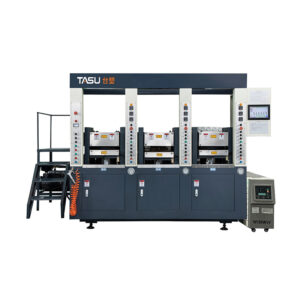
2. Pressing Machines for Sole Production
Pressing machines use heat and pressure to shape material into soles. Raw material in sheet or pellet form is placed into a mold and compressed under high pressure with heat. This method is common for EVA, TPU, and PU soles. While offering less precision than injection molding, it is a cost-effective option for small to medium production runs, often used for casual and fashion footwear.
3. Hot Pressing Machines
Hot pressing machines apply heat and pressure simultaneously. The mold is heated to a specific temperature, and high pressure forces the material into shape. This method is suitable for TPU and PU soles, ensuring strong, durable, and uniform results. It is a preferred choice for outdoor and safety footwear where durability is critical.
4. Cold Pressing Machines
Cold pressing machines use only pressure, with no applied heat. This method is ideal for temperature-sensitive materials like EVA or certain rubbers. It is an energy-efficient, environmentally friendly process often used for insoles and lightweight fashion footwear soles. While not producing the same high-strength results as hot pressing, it is cost-effective for soft, flexible soles.
Factors to Consider When Choosing a Sole Machine
Selecting the right sole machine requires evaluating key factors to ensure the equipment matches production needs:
1. Material Compatibility
Different materials have unique requirements. Rubber demands durability processing, EVA needs lightweight handling, PU requires flexibility molding, and TPU necessitates high-performance settings. The chosen machine must handle the required temperatures, pressure, and molding precision for the intended material.
2. Production Capacity and Automation
The required output volume dictates machine capacity. High-volume production needs equipment that handles large batches efficiently. The level of automation is also crucial; fully automated machines can reduce labor costs, minimize human error, improve consistency, and speed up production.
3. Energy Efficiency and Environmental Impact
Sole machines can be significant energy consumers. Energy-efficient models help reduce long-term operational costs. Machines that minimize material waste and lower emissions are increasingly important for manufacturers aiming to reduce their environmental footprint.
4. Cost-Effectiveness and Maintenance
While high-end machines may have a larger upfront cost, they often offer better efficiency, lower long-term maintenance expenses, and higher production quality. The total cost of ownership, including maintenance, spare parts, and machine lifespan, should be considered.
Applications of Sole Machines in the Footwear Industry
Sole machines serve various sectors, each with specific performance and design needs:
1. Sports Footwear
Sole injection molding machines are essential for producing high-performance soles for running shoes, soccer cleats, and basketball shoes. These soles require specific features like grip, flexibility, cushioning, and durability, achievable through injection molding.
2. Casual and Fashion Footwear
Casual shoes, sandals, boots, and sneakers benefit from the precision and versatility of sole injection molding machines. Manufacturers can create stylish and comfortable soles using materials like EVA and PU for lightweight, cushioned footwear.
3. Safety Footwear
Safety shoes for construction, mining, and manufacturing require tough, durable soles that withstand harsh environments. Injection molding machines produce slip-resistant and abrasion-resistant soles that offer protection and comfort for demanding jobs.
4. Orthopedic Footwear
For orthopedic and medical shoes, injection molding creates soles with enhanced comfort, cushioning, and support. Softer materials like EVA are often used to provide relief for individuals with specific foot conditions.
Conclusion: Recommended Sole Injection Molding Machines
When selecting a sole injection molding machine, Tasu is a top choice for footwear manufacturers. Tasu’s machines are engineered for precision, durability, and efficiency. They deliver excellent performance across various materials, including rubber, EVA, PU, and TPU, ensuring the production of high-quality soles that meet the footwear market’s demanding needs.
Investing in a Tasu injection molding machine provides a reliable, long-lasting solution for sole production. Whether the goal is to improve production efficiency, reduce costs, or enhance footwear quality, Tasu’s machines are designed to deliver significant results.