


Blow rubber molding is a specialized manufacturing process that utilizes air pressure to shape rubber materials into hollow parts and components. This method is widely employed in producing a variety of rubber products, such as seals, gaskets, inflatable items like air bladders, and medical devices. The process involves heating rubber until it becomes soft and then inflating it within a mold, allowing it to take on the desired shape. Unlike other rubber molding techniques, blow rubber molding excels at creating hollow shapes with intricate geometry, making it a popular choice in industries where flexible and complex designs are essential.
2. What is Blow Molding?
Blow molding is a versatile manufacturing process used to produce hollow plastic or rubber parts by inflating a material inside a mold. While commonly associated with plastic production, blow molding is also effectively used for rubber, especially when creating lightweight, complex, or large hollow parts.
Types of Blow Molding Processes
-
Extrusion Blow Molding: In this process, a continuous tube of material (called a parison) is extruded and then inflated into a mold to form the desired shape. It’s ideal for producing large containers like bottles or tanks.
-
Injection Blow Molding: A preform is first created through injection molding and then inflated to the desired shape in a second mold. This method provides higher precision and is often used for small, intricate parts such as medical containers.
-
Stretch Blow Molding: This method stretches the material both axially and radially before it is inflated in the mold. It’s commonly used for creating thinner-walled products like bottles, especially for the beverage industry.
When applied to rubber, blow molding offers the same benefits—creating complex, hollow parts that are lightweight and durable.
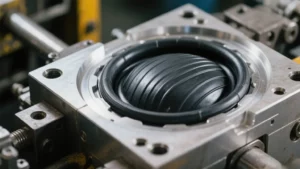
3. Blow Rubber Molding vs. Injection Molding
Both blow molding and injection molding are popular methods for creating rubber parts, but they differ in several key aspects.
Material and Design Flexibility
-
Blow Rubber Molding: Ideal for creating hollow, flexible, and lightweight rubber parts. Common applications include inflatable seals, rubber air bladders, and flexible hoses. This method allows for greater flexibility in terms of wall thickness and overall part design.
-
Rubber Injection Molding: Typically used for solid rubber parts with precise dimensions. It is best for creating components like gaskets, seals, and intricate parts with complex internal structures. Injection molding is known for offering tight tolerances and superior material consistency.
Production Volume
-
Blow Rubber Molding: Preferred for medium to large production runs due to its efficiency in creating hollow shapes quickly and at a lower cost per unit.
-
Rubber Injection Molding: Offers high precision but is usually better suited for large production volumes with high complexity and detailed features.
Cost Efficiency
-
Blow Rubber Molding: Generally more cost-effective for large quantities of simpler parts. The process is faster for hollow items, reducing material wastage and lead times.
-
Rubber Injection Molding: While initial setup costs can be higher, injection molding offers lower per-unit costs for highly detailed parts in high-volume production.
4. The Blow Rubber Molding Process
Blow rubber molding is a multi-step process that involves several stages to create the final product. Here’s a breakdown of how it works:
Step 1: Preparing the Rubber Material
The rubber material, typically in the form of granules, is heated in a barrel until it becomes pliable. Additives may be combined with the rubber to achieve desired properties, such as improved flexibility or chemical resistance.
Step 2: Preform Creation
A “parison” (a tube of rubber) is created by extrusion or injection molding, depending on the method. The rubber tube is then positioned inside a mold cavity.
Step 3: Mold Formation
Once the preform is placed inside the mold, it is sealed, and air is injected into the tube. The air inflates the rubber inside the mold, causing it to take on the shape of the cavity. The pressure ensures that the rubber material is evenly distributed.
Step 4: Cooling and Ejection
After the part is fully inflated and takes the desired shape, it is cooled. This solidifies the rubber, allowing it to retain the mold shape. Once cooled, the molded part is removed from the mold cavity.
Step 5: Finishing
Excess material or flash is trimmed off, and the part is inspected for quality. Additional finishing operations, like surface treatment or coating, may be applied if necessary.
5. Advantages of Blow Rubber Molding
Blow rubber molding offers several benefits, making it an attractive choice for specific applications:
-
Cost-Effective Production: Ideal for high-volume production runs, reducing material waste and minimizing post-production operations.
-
High Precision and Flexibility: Capable of creating complex, detailed parts with varying wall thicknesses.
-
Hollow Parts and Lightweight Designs: Produces lightweight hollow parts, beneficial in industries like automotive and medical devices.
-
Speed: Faster compared to traditional rubber molding methods, suitable for applications requiring quick turnaround times.
6. Applications of Blow Rubber Molding
Blow rubber molding is used across a wide range of industries, particularly when complex, hollow, and flexible rubber parts are required. Common applications include:
-
Automotive: Gaskets, seals, air bladders, and rubber components for air conditioning, suspension systems, and tires.
-
Medical: Flexible seals, respiratory devices, and other rubber parts requiring durability and flexibility.
-
Consumer Goods: Inflatable toys, balls, and rubber accessories benefiting from lightweight, flexible designs.
-
Industrial: Rubber hoses, connectors, and parts used in heavy machinery or manufacturing equipment.
7. Rubber Injection Molding vs. Blow Molding
While blow rubber molding has its advantages, rubber injection molding may be the better choice in some cases:
-
Rubber Injection Molding: Better suited for highly detailed, solid rubber parts requiring precise control over dimensions and material consistency.
-
Blow Rubber Molding: More efficient for producing hollow parts, typically faster and more cost-effective for large production runs of simple designs.
Choosing between the two methods depends on product requirements, including part complexity, material properties, and production volume.
8. The Role of Rubber Injection Molding Machines
Rubber injection molding machines are crucial for creating high-precision rubber components. These machines inject heated rubber into a mold under high pressure, ensuring that the material fills every cavity accurately.
When comparing rubber injection molding machines to blow molding equipment, the primary difference lies in the type of mold used. Blow molding machines require specialized molds that can handle inflation and air pressure, whereas injection molding machines focus on precision material injection.
9. Common Issues in Blow Rubber Molding
Like any manufacturing process, blow rubber molding comes with challenges:
-
Inconsistent Wall Thickness: Poor inflation control may result in uneven wall thickness, compromising part strength and durability.
-
Flash: Excess rubber material may leak from the mold, creating unwanted extra material that needs trimming.
-
Material Waste: Improper material handling can lead to wastage during the inflation process.
To overcome these issues, manufacturers must ensure precise control of air pressure and mold temperature during production. Regular maintenance of molds and equipment is also key to minimizing defects.
Conclusion
Blow rubber molding is a versatile and efficient manufacturing process that offers unique advantages for producing hollow rubber parts. With its ability to create lightweight, flexible, and complex designs, it serves a wide range of industries, from automotive to medical. Understanding the intricacies of blow rubber molding, including its advantages, applications, and potential challenges, is essential for manufacturers looking to leverage this innovative technique in their production processes.